
Managing regulatory risk requires audits, checklists, risk registers, analytics, and expert reviews. Combining these tools and fostering continuous compliance helps medical device companies proactively spot and address potential FDA issues.

Effectively managing regulatory risk requires a systematic approach – employing the right tools and methods to continually evaluate compliance. One cornerstone method is the internal audit. FDA regulations themselves mandate that device manufacturers conduct regular quality audits of their operations (21 CFR 820.22) to assure the quality system is in compliance. An internal audit program is essentially an in-house regulatory risk assessment tool: trained auditors (internal or third-party) review the company’s processes against FDA requirements and standards, identifying any weaknesses or non-conformances. By performing audits on a routine schedule (e.g. semi-annually or whenever significant changes occur), firms can catch issues like incomplete procedures or poor record-keeping before FDA inspectors do. For example, an internal audit might discover that the CAPA process is not adequately documented or that employees are not following the complaint handling SOP – findings that, if left uncorrected, could lead to FDA 483 observations. A robust audit program not only flags these risks but also drives corrective actions to fix them, thereby lowering overall regulatory risk.
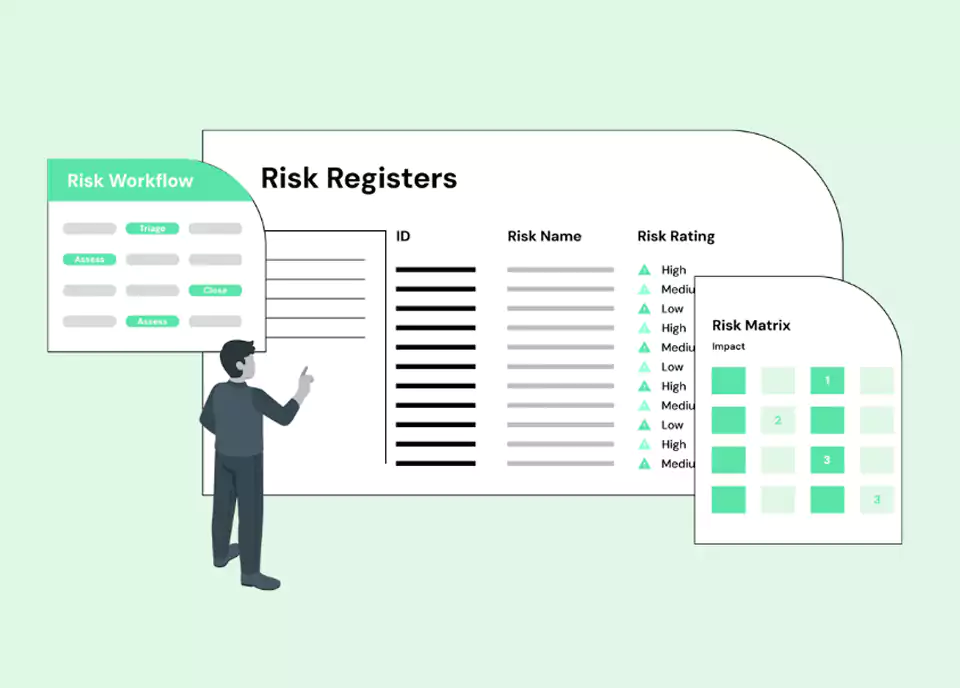
Another essential tool is a regulatory risk register or checklist. This is a living document or software tool where all identified compliance risks are listed, assessed, and tracked. It typically includes the specific regulation or requirement at risk of being violated, the potential impact (severity) if not in compliance, the likelihood of occurrence, and the mitigation measures in place. For instance, a risk register entry might be: “Risk: Incomplete Design History File – could violate 21 CFR 820.30 and delay 510(k) clearance. Likelihood: Medium; Severity: High (submission refusal possible). Mitigation: implement a design control checklist and perform management review of DHF before submission.” Such structured tracking ensures no known compliance risk is forgotten. Teams can prioritize risks (e.g. a missing supplier qualification procedure might be high risk if production is scaling up) and allocate resources to address the biggest vulnerabilities first. The risk register approach mirrors what FDA expects in product risk management (ISO 14971), but here it’s applied to regulatory compliance processes themselves – a practice encouraged by the integration of risk-based thinking in modern quality systems.
Speaking of ISO 14971, adopting risk management frameworks from product safety into compliance can be very beneficial. For example, some companies use a Failure Mode and Effects Analysis (FMEA) approach to regulatory processes – essentially a “Compliance FMEA.” They list potential failure modes in their quality system (like “Supplier not evaluated” or “Adverse events not reported timely”) and analyze causes, current controls, and improvements. This methodical breakdown helps uncover hidden process risks. Additionally, referencing standards and guidance documents is a key method: FDA’s guidance documents often outline expectations that can serve as a checklist. For instance, the FDA’s “Refuse to Accept” checklist for 510(k) submissions (available in guidance form) is an excellent tool – it contains around 56 points that FDA reviewers check to decide if a submission is administratively complete. Companies can use this RTA checklist proactively to self-inspect their submission package, thus assessing risk of a refuse-to-accept scenario. Since about 30% of 510(k) submissions in recent years have been rejected at the initial acceptance stage for not meeting these basic criteria, using the checklist as a tool dramatically reduces the risk of such an outcome. In general, aligning internal checks with FDA’s published checklists and guidances (e.g. for premarket submissions, for good manufacturing practices, etc.) is a smart way to gauge compliance readiness.
Modern technology is also expanding the toolkit for regulatory risk assessment. Data analytics and predictive modeling are emerging methods to anticipate compliance problems. For example, some companies analyze industry-wide FDA inspection data (the FDA publishes inspection observations by year and category) to predict which areas might be scrutinized. If analysis shows a rising trend in software-related 483 observations, a firm making a software-based device might heighten its internal review of software development practices. Likewise, warning letter trend analysis (discussed more in the next section) can feed into predictive risk tools. Cutting-edge organizations are even exploring AI-driven compliance monitoring – using software that scans documents and processes for gaps or uses machine learning to predict which sites or processes pose the highest regulatory risk. While still nascent, these predictive compliance tools aim to move companies from reactive to proactive. An AI-based system might, for instance, flag that a training record system has many incomplete entries, predicting a likely compliance issue (as training documentation is often checked by FDA). There are reports of AI analytics reducing audit preparation time significantly by identifying issues in advance. Even without sophisticated AI, simpler analytics like tracking key quality metrics (CAPA closure times, complaint volume, etc.) and using control charts can help identify out-of-control processes that could lead to non-compliance.

Finally, a method that should not be overlooked is leveraging expert review and external benchmarks. Sometimes bringing in a fresh set of eyes – e.g. a regulatory consultant or doing a peer review exchange with another company – can reveal risks that insiders miss. Benchmarks from industry consortia or publications (like RAPS or AAMI) can show what common pitfalls others face, so you can proactively check for those in your own system. For example, if industry data shows many startups fail to document software validation, a startup can add an extra verification step to ensure all software in their device is validated and records are kept. FDA’s increasing harmonization with ISO 13485 (the international QMS standard) also provides a method: perform a gap analysis between your quality system and ISO 13485 clauses, as ISO 13485 places explicit emphasis on risk management and other practices that the older QSR did not fully encompass. With the new FDA Quality Management System Regulation (QMSR) aligning to ISO 13485 on the horizon, this gap analysis doubles as future-proofing – ensuring you’ve assessed and mitigated risks that will be expected in coming regulations.

In summary, companies should employ a combination of auditing, checklists, risk registers, data analysis, and expert input to thoroughly assess regulatory risks. No single tool is sufficient on its own. A culture of continuous improvement, where every significant process and decision is viewed through a compliance risk lens (“how could this go wrong in FDA’s eyes?”), is the ultimate method to stay ahead of regulatory troubles.